Independent Society for Archetypal Psychology
Image and copyright by Iwona Kwiatkowska
Independent Society for Archetypal Psychology
our mission
The mission of the Association is to promote archetypal thought, create an open and supportive environment for both enthusiasts and practitioners, and provide a space for the creative exchange, autonomy and Self-determining.
Image and copyright by Barbara Rainko
Independent Society for Archetypal Psychology
Management Board
President: Aleksandra Szczepaniak
Vice President: Kamila Rainko
Secretary: Emilia Tołkaczew

Image by B. Rainko
Independent Society for Archetypal Psychology
members
Joanna Babińska
Jana Dębska
Agnieszka Fok
Katarzyna Głowacka
Joanna Kasza
Mateusz Kolaszkiewicz
Patryk Kowalik
Kamila Kozak-Wójcicka
Elżbieta Moryto
Małgorzata Nader
Katarzyna Osenkowska
Anna Ogrodowczyk
Katarzyna Plucinska
Kamila Rainko
Magdalena Sokół
Bożena Studnik
Aleksandra Szczepaniak
Emilia Tołkaczew
Image by I. Kwiatkowska
Independent Society for Archetypal Psychology
Supervisory Committee
Mateusz Kolaszkiewicz
Katarzyna Osenkowska
Iwona Kwiatkowska

Image by B. Rainko
Independent Society for Archetypal Psychology
Committee on Ethics
Joanna Kasza
Elżbieta Moryto
Małgorzata Nader
The Ethics Committee serves as an advisory body that supports all members of the Association, therapists, and their patients.
Image by B. Rainko

Image by. B. Rainko
Independent Society for Archetypal Psychology
The book
We have begun work on a book on Archetypal Psychology. consultations are underway, and a forum for exchanging ideas is active. Some of the chapters are already finished. Below we publish brand new fragments—enjoy!
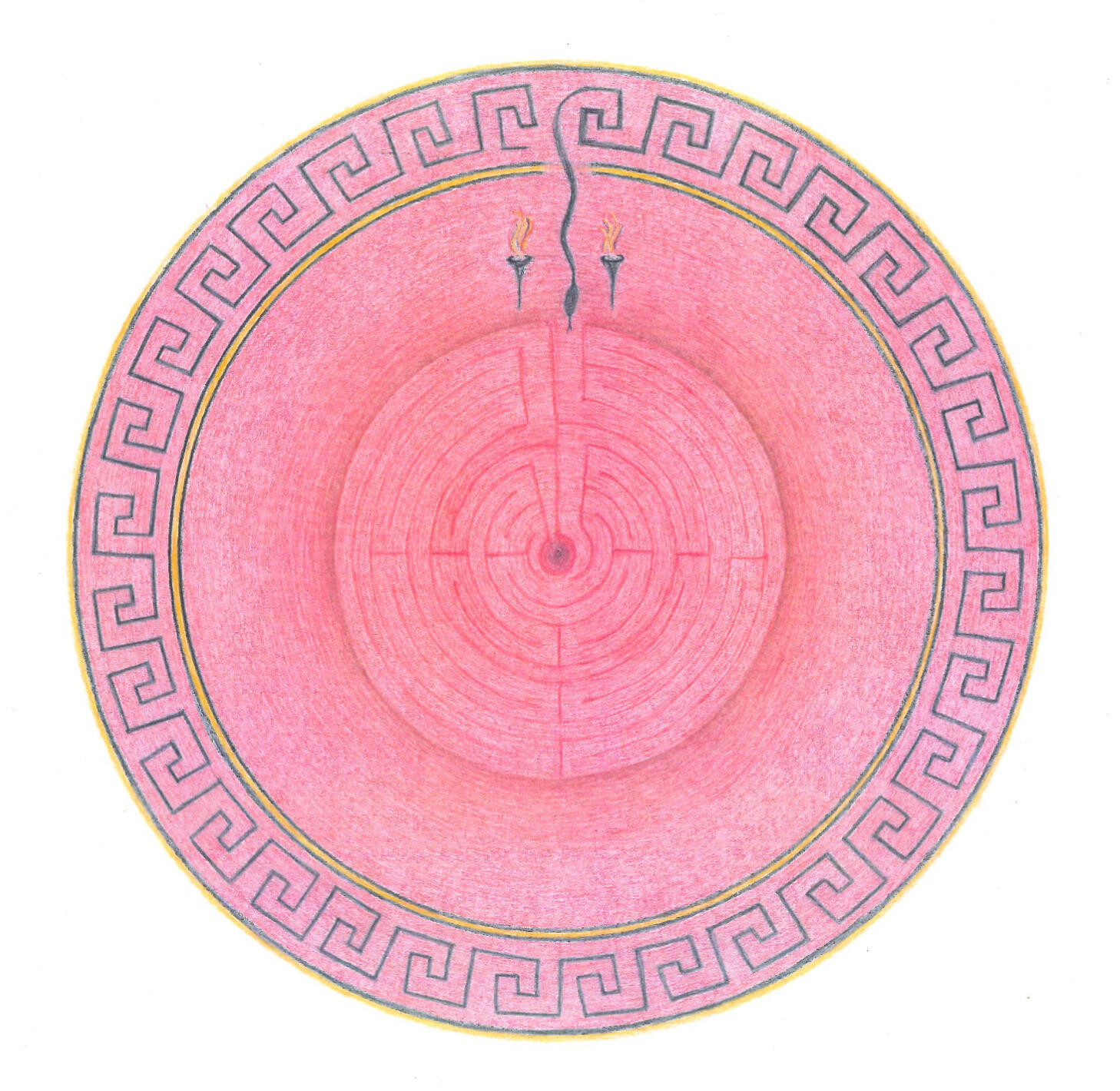
Image by. I. Kwiatkowska
Independent Society for Archetypal Psychology
The book
Magdalena Sokół, „On Narcissism”
How essential the symbolism of water is in the story of Narcissus—it gives meaning and significance to this myth. The surface of the water resembles a mirror.
According to James Hillman, the mirror is a symbolic gateway to the inner world. Through it, transformative questions arise, signaling the metamorphosis of Narcissus: “Is there something within me that resembles a forest pond? Do I possess a deeper reservoir of my thoughts and feelings, located far from well-trodden paths, its surface untouched and smooth? Do I have within me a moist domain beyond the dry realm of intelectualism—
a realm of wet emotions, lush, green, shadowy imagination? Do I sometimes find myself \awakening in the land of reflection, where, in a moment of wonder and sleepy contemplation, I allow myself to glimpse the fleeting image of an unfamiliar face that belongs to me? If so, it means that the myth of Narcissus is ripening within me (as Thomas Moore claims)—a remedy for narcissism.”

Image by. B. Rainko
Independent Society for Archetypal Psychology
The book
Katarzyna Osenkowska, on culture
It is not only the form or the effects of the internet and technology that influence our culture, but also the images and content that reach us from these sources, primarily through social media. (…) However, one should distinguish image- making, which in Jungian psychology is associated with creating personal psychic images through the mediation of the Anima and contributes to an authentic relationship with oneself—referred to as soul-making (Shalit, Hillman)—from the image (imago) that we deliberately construct online.
In the world of the term image is linked to building a public persona, and is therefore closely related to fields such as marketing and public relations. It is telling that, as an example of the second meaning of the term image, the dictionary cites: “she strives to project an image of youth” (Oxford University Press, n.d.), which in free translation means: she strives to project or evoke an impression of youth. This sentence shows that image-building is indeed tied to creating a particular impression. Moreover, constructing an image of youth is precisely what we encounter on a large scale on the internet and in our culture. (…)
If we analyze the images and photographs flowing from social media platforms, we can easily see that they are dominated by images of people with a youthful appearance, confident, traveling to exotic places, pursuing athletic passions and interests, and giving the impression of leading interesting, active lives full of adventure. Creating or evoking the right impression is crucial online and forms the basis of most online activity. Because our lives today are so deeply intertwined with the virtual world, image-making and impression-making have entered many areas of our daily functioning—even those where they had no place.

Image by. B. Rainko, costume by the photographed artist
Independent Society for Archetypal Psychology
The book
Iwona Kwiatkowska, „Dementia”
While the metaphor of Christmas lights is apt for describing neural connections in healthy brains, for people with dementia a more fitting metaphor is the fading of paths and landmarks.
Forest paths exist so that we can move along them safely. When those paths become blurred and the landmarks unreadable, we get lost in the forest. This is precisely what happens to people with dementia — they are disoriented; the reality they once navigated with ease before the illness has become unintelligible. They have lost their compass and can no longer set a direction. People from my generation probably remember the film Never Ending Story.
The main theme of this tale is the gradual disappearance of the land of Fantasia, which is being consumed by the Nothing.
A similar process happens to the neurons in the brains of people with dementia: like the land of Fantasia, they sink into nothingness, and people become indifferent as what once energized them slowly fades away. In The NeverEnding Story, Fantasia can be saved by giving the Childlike Empress a new name.
This motif opens the door to another issue that arises in the context of Alzheimer’s disease — identity.

Image by. B. Rainko
Independent Society for Archetypal Psychology
The book
Kamila Rainko, on obsessions, compulsions, and Ananke
Before the era of psychiatry, among clergy there existed the concept of “scrupulosity” — from Latin scrupulus, a sharp pebble, usually in one’s shoe. It referred to a state of constant, pathological guilt combined with the obsessive need to perform religious rituals. The term was useful for confessors, as it was important to distinguish “true sinners” from those with an obsessive conscience.
In the early days of psychiatry, before the era of clinical classifications, there were local, often subjective terms related, for example, to words like compulsion, obsession, or morality, such as: religious compulsions, moral obsessions, obsessive madness, intrusive, etc. Gradually, obsessions and compulsions were separated and differentiated from psychoses, or “madness,” through terms like folie raisonnante (reasonable madness), zwanghafte Persönlichkeitsstörung (compulsive personality disorder). Once the term neurosis emerged, obsessive-compulsive disorders came under it: compulsion neurosis, Zwangsneurose, obsession neurosis.
At the end of the 19th century, the term anankasm appeared in psychiatric and neurological literature, initially referring to a wide range of “compulsive” symptoms. Terms such as anankastic psychopathy also appeared, until finally, in the mid-20th century, the phenomenon of anankastische Persönlichkeit was described, corresponding to a personality disorder. This proposal entered ICD-8, giving the phenomenon a mythological dimension — Ananke, the goddess of necessity and compulsion.
Image by. B. Rainko
Independent Society for Archetypal Psychology
Workshops
We place great importance on staying in touch with the world of Archetypal Psychology, and deepening our psychotherapeutic work. The monthly seminars we organize cover a wide range of topics and are held together with specialists in the field. We want to create a vibrant community of Archetypal Psychology in Poland.

Image by. B. Rainko
Independent Society for Archetypal Psychology
Recent Workshops
On November 29–30, 2025, we held a two-day training that covered the following topics: depressive states and depression - archetypal perspective; anxiety; obsessions, and compulsions in Jungian and archetypal approach; anxiety in adolescence and its amplifications; selected culture-related issues: social media, collective trends and how they influence the individual.

Image by. B. Rainko


Image by. B. Rainko

